Reflecting on the Revised Common Lectionary to live out the gospel in all of life
Friday, March 27, 2009
the great Greek non sequitur
John 12:20-33
For Sunday, March 29, 2009
Fifth Sunday in Lent
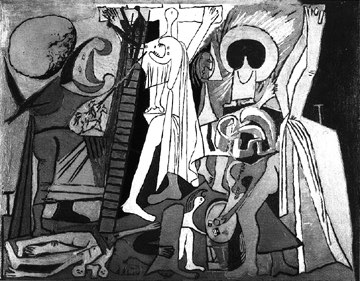
Some curious interaction appears to be happening in this passage. First, some Greeks approach Philip and say, "We would like to see Jesus." Philip consults with Andrew, the two of them approach Jesus, and Jesus responds, "The hour has come for the Son of Man to be glorified." Philip might reasonably have said, "Well . . . okay Lord, but what do you want me to tell these Greeks?" Then we never hear from the Greeks again.
Yet upon further reflection, maybe Jesus' response starts to make some sense. For if we, along with these Greeks, want to see Jesus, we will need to see him not as fitting within our own expectations but fitting within God's redemptive plan for the world. The Jews expected a Messiah who would come to earth, save them from the Romans, and then rule in their midst forever. What they didn't expect was the sacrifice on the cross that would bring Jesus' rule into force.
What kind of Jesus am I expecting? One that will save me from eternal damnation but allow me to live however I please in this life? "Walk while you have the light, before darkness overtakes you" (v. 35). As believers we are called to follow Jesus into sacrifice: "Whoever serves me must follow me; and where I am, my servant also will be" (v. 26). Let us not be lovers of ourselves but lovers of Christ and the redemptive doorway of the cross at which we die to ourselves for God's glory.
Monday, March 23, 2009
soul cleansing
For Sunday, March 29, 2009
Fifth Sunday in Lent
At left is a picture of hyssop, a beautiful little blue plant with aromatic qualities and used in eau de Cologne and the liquor Chartreuse. I don't have any eau de Cologne and haven't had the pleasure of a Chartreuse, yet to the Jewish soul the smell of hyssop would have brought to mind the experience of the priest in the temple offering a ceremony of cleansing prayer.
At Christmastime our family was reading the story of the three wisemen and my 6 year old asked, "What is myrrh?" I ordered some myrrh incense by internet and as soon as I lit the first stick I was taken back into the experience of Orthodox worship I had in Russia. Smell can take us so quickly to the core of our experience.
What a wonderful lenten soul cleansing this Psalm is. I love to pray this back to the Lord. "Have mercy on me, O God, according to your unfailing love. Let me hear joy and gladness. Let the bones you have crushed (my damaged emotions) rejoice. Create in me a pure heart, O God, and renew a steadfast spirit within me. Restore to me the joy of your salvation and grant me a willing spirit, to sustain me."
This week's first reading about the New Covenant spoke of God's law being written onto our very minds and hearts. Let the sin that would confuse, distract, and mislead us be removed today by the aroma of confession and repentance.
Sunday, March 22, 2009
a new covenant . . . and why does this matter?

Jer. 31:31-34
For Sunday, March 29, 2009
Fifth Sunday in Lent
'Covenant' is not a word you are likely to hear discussed on the Sunday morning talk shows. The concerns of our contemporary world are more around words like 'economy', 'terror', 'environment', or 'health care'. Yet for God, clearly the concern of 'covenant' is central. What does it mean? Why does it matter so much for God? ... And should it mean anything for us? If so, what?
A 'Covenant' is something which binds two parties together. For example, the marriage covenant binds husband to wife. Through the prophet Jeremiah God says, "The time is coming when I will make a new covenant with the house of Israel." In other words, God is putting into place a new agreement binding Him to his people. How would this binding agreement be different than the one He made initially?
A 'Covenant' is something which binds two parties together. For example, a marriage covenant binds husband to wife. Through the prophet Jeremiah God says, "The time is coming when I will make a new covenant with the house of Israel." In other words, God is putting into place a new agreement binding Him to his people. How would this binding agreement be different than the one He made initially? It would be different in that rather than writing his law on tablets of stone God would now be writing his law on the very hearts and minds of his people. Where his people had failed to keep the Old Covenant, they could not fail to keep the New Covenant, because it would be written into their very beings.
Christians, as people of God under this New Covenant, therefore cannot fail. "Wait a minute," you might respond, "I'm a Christian, and I fail all the time, and certainly most if not all the Christians I've ever met have the same problem." Let's be careful here to remember the kind of failure that God has in mind, namely, the breaking of that which binds God to his people. The key difference between the Old and New Covenant is that while the Old contained within it conditions for the bound people to fulfill, the New Covenant has none of these. Everything is on God's side of the ledger.
Here then is the so what. First, if you really are a Christian, enjoy the security of God's binding commitment to you. Yes, you will fail morally, spiritually, personally. Yet you cannot fail in terms of the covenant, because God has bound you to Him. Therefore, give him all of your life that you might bring glory to His marvelous name. You don't have to be perfect: you just have to be moving in the direction of God's glory.
So why then is 'covenant' such an important idea to God? It's because he is all about relationship. We actually understand this without realizing it. For us, what is more important then our relationships with mother, father, brother, sister, best friend? Ultimately, very little if anything.
What then if we made what is most important to God most important to us? What if we lived in a way that reflected our desire to honor the covenant God has made unconditionally with us?
I have so committed myself today. It's tremendously freeing, empowering, and peaceful. Care to join me? He loves you. He's here for us. Praise the Lord.
Tuesday, March 10, 2009
savior of the world
Salvator Mundi, Savior of the WorldAntonello da Messina (1430-1479)
National Gallery, London
For March 15, 2009
Third Sunday in Lent
Jesus Christ is the Savior of the world. "... But that's so... absolute. How can you be sure?" I can be so sure because of this week's readings.
The first reason we can affirm Christ as the Savior of the world is that He is the Son of the one who has said, "I am the Lord your God" (Exodus 20:2). This God is the one who provided us with 10 commandments the observance of which defines true success in life.
The second reason we can affirm Christ as the Savior of the world is then found in this: "The heavens declare the glory of God" (Psalm 19:1). The heavens are not the product of many Gods but rather of the one true God. Their order and majesty are self-evident.
The third reason we can affirm Christ as Savior of the world is that he provided a miraculous sign to prove it. "Destroy this temple, and I will raise it again in three days" (John 2:19). Jesus was crucified on day 1, Good Friday, and raised to life on day 3, Easter Sunday.
The final reason we can affirm Christ as Savior of the world is the experience of Christians. "For the message of the cross is foolishness to those who are perishing, but to those who are being saved it is the power of God" (1 Cor. 1:18).
Are you among those perishing or among those being saved? Let today be the day you acknowledge Christ as Savior of the world.
Third Sunday in Lent
Jesus Christ is the Savior of the world. "... But that's so... absolute. How can you be sure?" I can be so sure because of this week's readings.
The first reason we can affirm Christ as the Savior of the world is that He is the Son of the one who has said, "I am the Lord your God" (Exodus 20:2). This God is the one who provided us with 10 commandments the observance of which defines true success in life.
The second reason we can affirm Christ as the Savior of the world is then found in this: "The heavens declare the glory of God" (Psalm 19:1). The heavens are not the product of many Gods but rather of the one true God. Their order and majesty are self-evident.
The third reason we can affirm Christ as Savior of the world is that he provided a miraculous sign to prove it. "Destroy this temple, and I will raise it again in three days" (John 2:19). Jesus was crucified on day 1, Good Friday, and raised to life on day 3, Easter Sunday.
The final reason we can affirm Christ as Savior of the world is the experience of Christians. "For the message of the cross is foolishness to those who are perishing, but to those who are being saved it is the power of God" (1 Cor. 1:18).
Are you among those perishing or among those being saved? Let today be the day you acknowledge Christ as Savior of the world.
Subscribe to:
Posts (Atom)
